Scalable LoRaWAN Environmental Network
An end-to-end industrial IoT telemetry network—from custom hardware manufacturing to data pipelines—driving municipal infrastructure policy.
Infrastructure dictates the indoor air environment, which in turn acts as a critical driver of educational equity. To quantify health, comfort, and cognitive risks in low-income educational infrastructure, a highly resilient, long-term environmental monitoring data system was required.
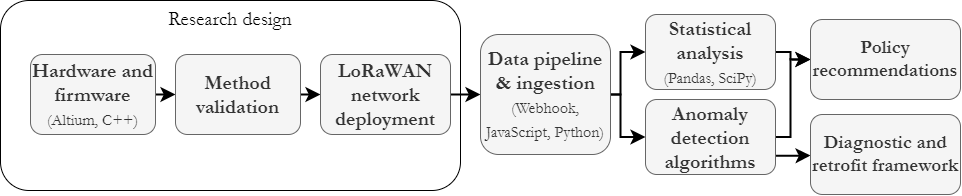
Executed as the core architecture of my PhD research, I operated as the sole systems architect across the entire “sensor-to-policy” pipeline. I designed and mass-produced the IoT hardware, managed the multi-site LoRaWAN network, and engineered the end-to-end data pipelines required to securely ingest, clean, and structure over 3 million telemetry data points over a 24-month period.
The resulting observational analysis was presented to the City of Cape Town’s Environmental Health specialists, directly influencing capital infrastructure upgrades (roof retrofitting) for container classrooms.
1. Hardware architecture & Mass production
The hardware required a delicate balance between low-power longevity and highly reliable RF transmission.
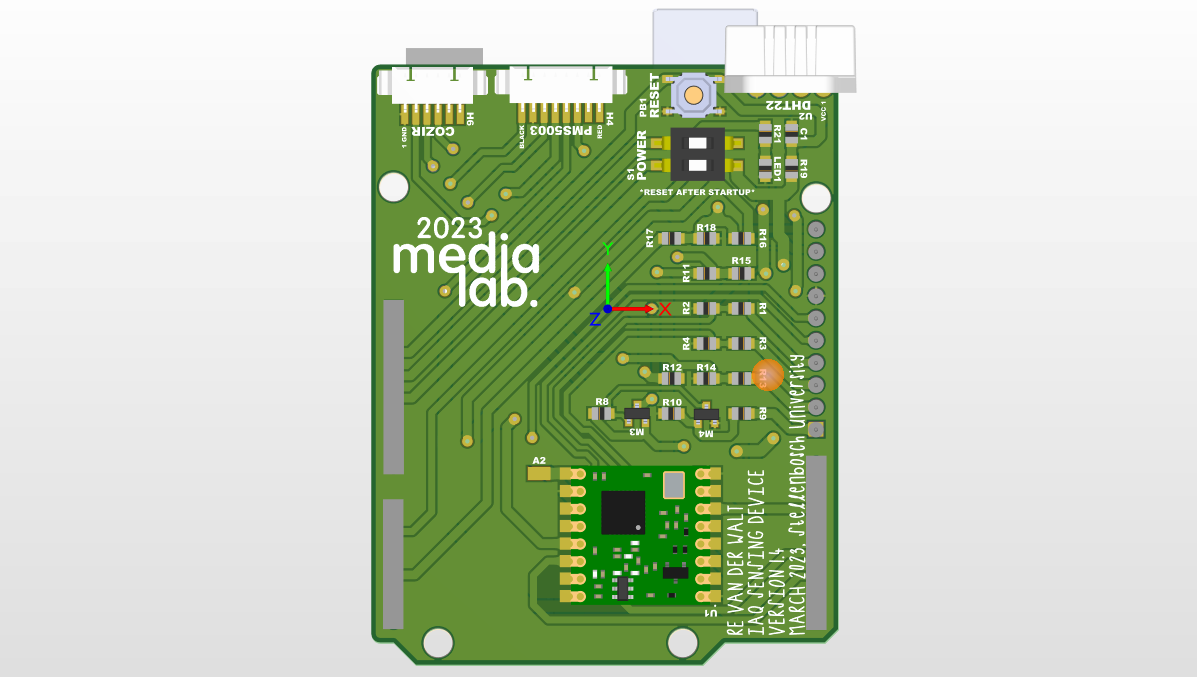
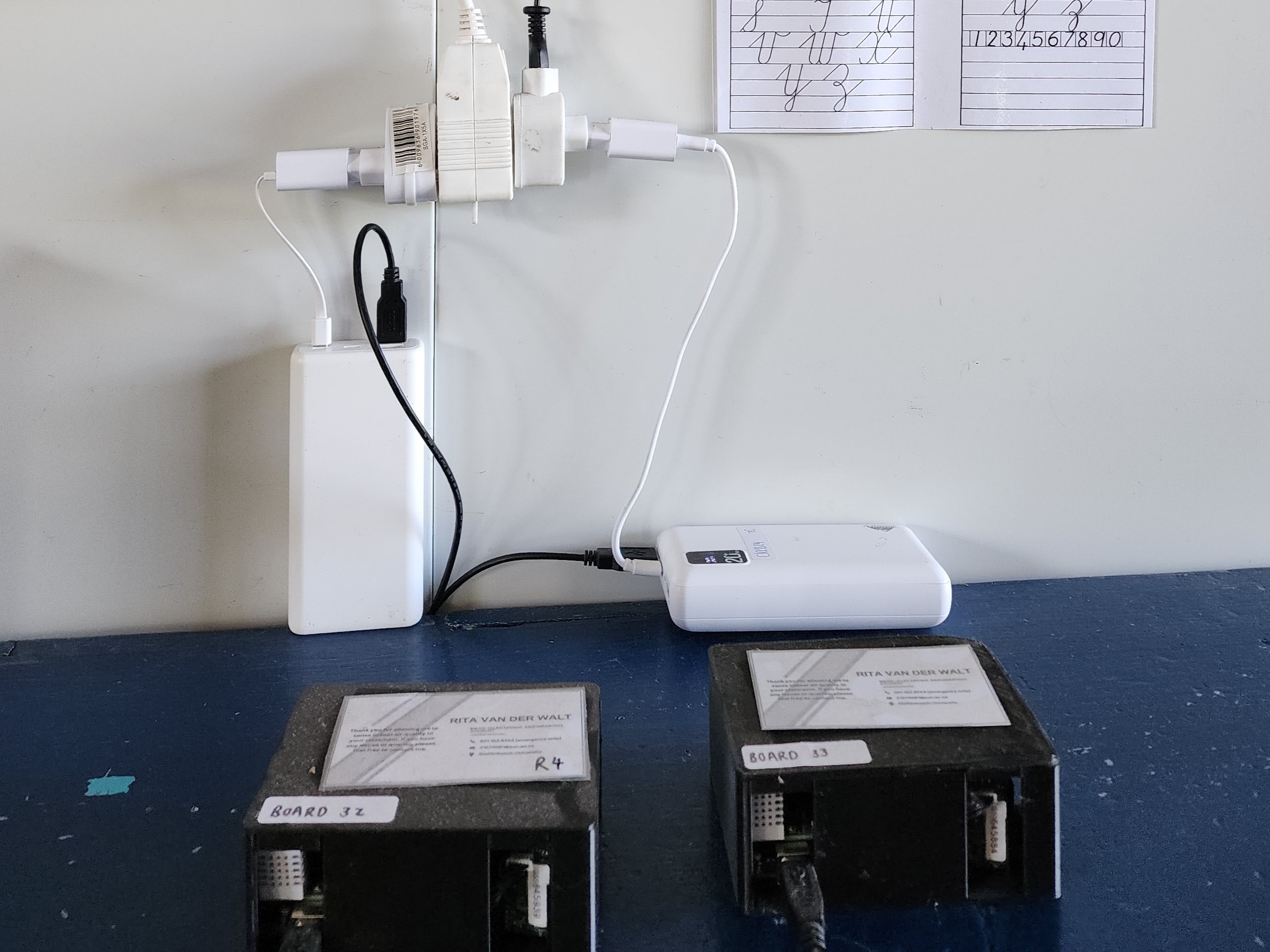
- Generic Hardware Platform: I architected the core node around an Atmel microcontroller and an RFM95 LoRa transceiver. Crucially, the board was designed to be highly generic and modular. This exact architecture was subsequently adapted and repurposed for multiple other remote sensing deployments, including outdoor forestry anemometers and the Saldanha Bay industrial dust loggers.
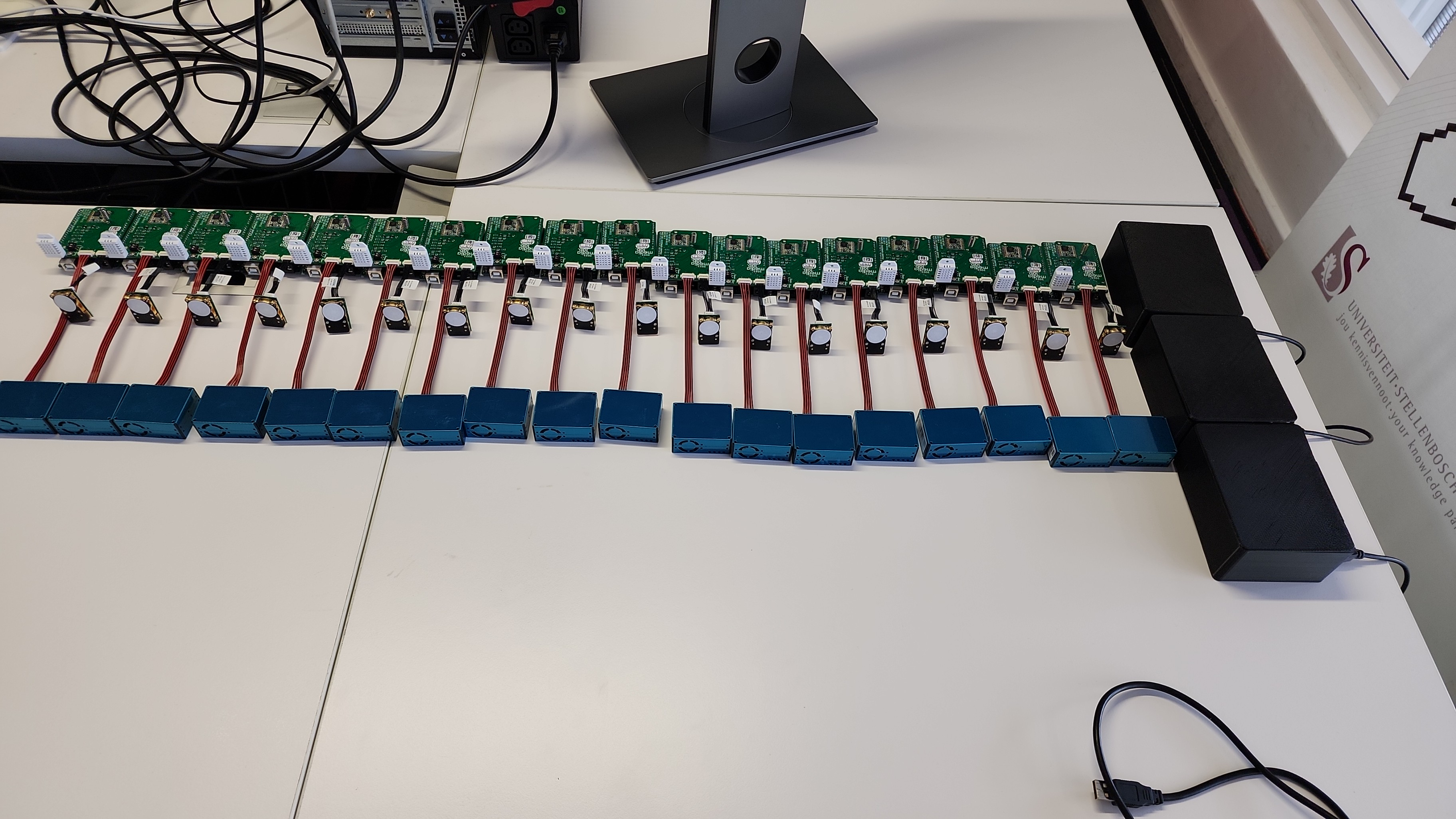
- Design for Manufacturing (DFM): I managed the transition from early-stage in-house prototyping (PCB milling and manual SMD soldering) to outsourced volume manufacturing. This involved strict BOM management, component sourcing, and yield validation for a mass-produced fleet of 100 end devices.
- Mechanical Integration: I modelled and 3D-printed custom enclosures designed for tamper-resistance and optimal airflow, ensuring the I2C environmental sensors could sample accurately without external interference.
2. Network operations & Fleet management
Deploying hardware is only the first step; maintaining an operational fleet across diverse, remote locations requires rigorous network management.
- Infrastructure Deployment: I directed the physical deployment of the sensor fleet across multiple schools, configuring and installing the gateway infrastructure to ensure overlapping coverage and high signal resilience.
- Uptime & Maintenance: Over the 24-month longitudinal data collection period, I monitored gateway uptimes, managed node power consumption profiles, and conducted on-site debugging and hardware maintenance to ensure the continuity of the dataset.
3. Full-Stack Data Engineering & Pipeline Architecture
With a fleet of 100 devices transmitting high-frequency LoRaWAN data across distributed sites, the limiting factor of the project was not hardware, but data integrity. I engineered a robust, automated backend pipeline to capture, parse, and structure the telemetry without data loss.
- Real-Time Ingestion (JavaScript & Webhooks): I architected custom serverless workflows utilizing Google Apps Script and secure Webhooks to intercept the raw data payloads arriving from the LoRaWAN gateways. The scripts handled real-time decryption, JSON parsing, and initial metadata tagging before logging the data to a central repository.
- Algorithmic Data Cleaning (Python): Managing the ingestion of over 3 million data points required rigorous, programmatic quality control. I developed automated filtering scripts in Python utilizing Pandas and SciPy to clean the raw datasets.
- Anomaly Detection & Validation: The Python pipeline successfully identified and isolated hardware-level noise, including sensor drift, component warm-up anomalies, and false readings, while permanently archiving the raw telemetry for post-hoc reliability analysis and version control.
4. Observational analysis & Policy impact
The ultimate value of this engineering effort was the translation of raw telemetry into actionable municipal policy.
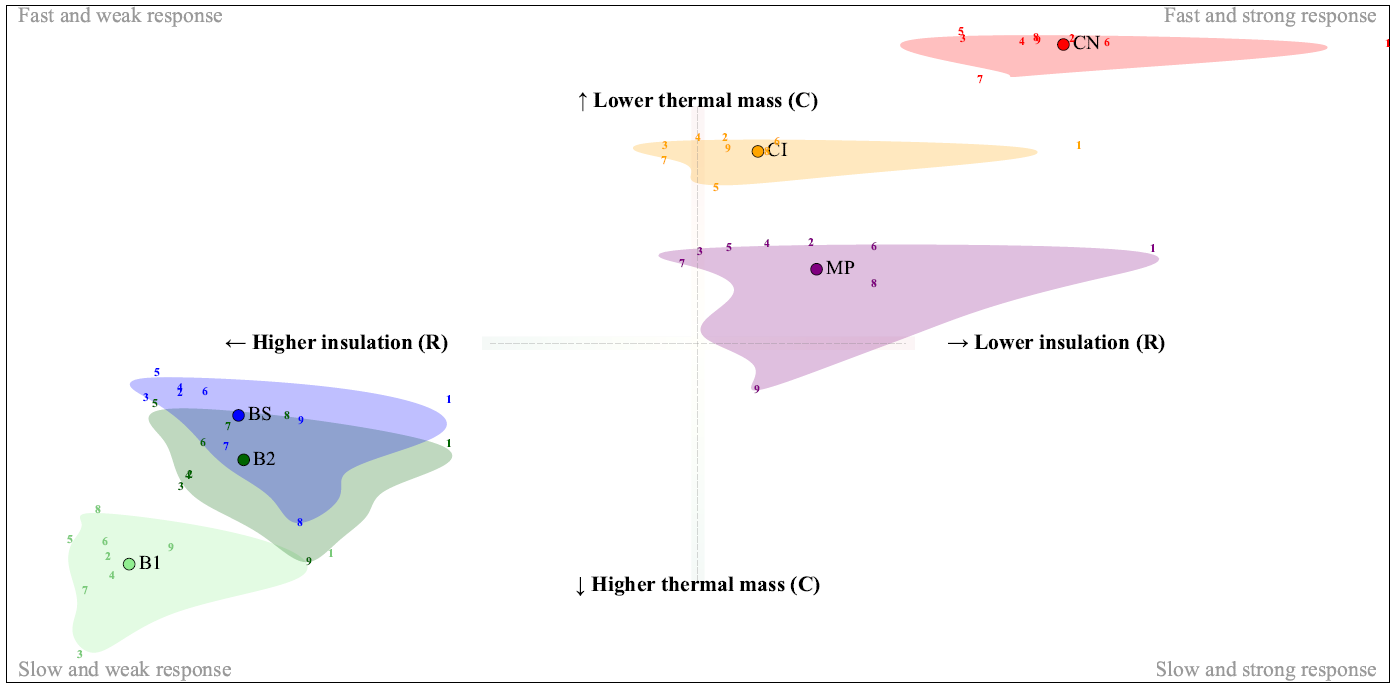
By applying advanced statistical analyses to the cleaned 24-month dataset, my Python algorithms successfully isolated thermal solar loading anomalies specific to certain building infrastructures. I provided an evidence base quantifying the severe exposure levels and comfort risks experienced by students in prefabricated container classrooms.
When benchmarked against international environmental standards (SANS, WHO, ASHRAE, ISO), these data-driven findings were used to justify immediate capital expenditure, resulting in the successful execution of roof retrofitting for the affected schools.