Saldanha Bay PM2.5 Environmental Logger
A custom solar-powered particulate matter and temperature data logger engineered for an interdisciplinary Earth Sciences study on industrial dust pollution.
Air pollution and industrial dust emissions present significant environmental and public health concerns. To accurately track these emissions around the industrial hub of Saldanha Bay, the BIOGRIP Earth Sciences research group required high-frequency, autonomous particulate matter (PM2.5) data from the field.
I functioned as the dedicated hardware engineer for this research initiative. I designed, developed, and programmed a custom, solar-powered environmental data logger capable of surviving a highly corrosive coastal and industrial environment while reliably writing time-series data to an SD card.
The hardware I delivered operated continuously in the field for nine months, providing the critical time-series insights needed to co-author a published governmental report on the region’s air quality.
1. Hardware architecture & Data logging
The research required continuous, high-frequency data logging without access to municipal power or Wi-Fi infrastructure.
- Sensor Payload: The device was integrated with a PMS5003 particulate matter sensor to accurately sample PM2.5 mass and particle number concentrations, alongside a dedicated temperature sensor to track environmental variables that impact dust transport.
- Time-Series Data Logging: I wrote the bare-metal firmware to sample the sensors and write timestamped, formatted time-series data directly to an onboard SD card at strict 1-minute intervals, ensuring the researchers had high-resolution data for their temporal analysis.
- Autonomous Power Management: To ensure uninterrupted operation in remote locations, I designed a solar-powered architecture. The system successfully managed its own power budget, harvesting solar energy to keep the device running continuously throughout varying weather conditions.
2. Environmental resilience & Interdisciplinary impact
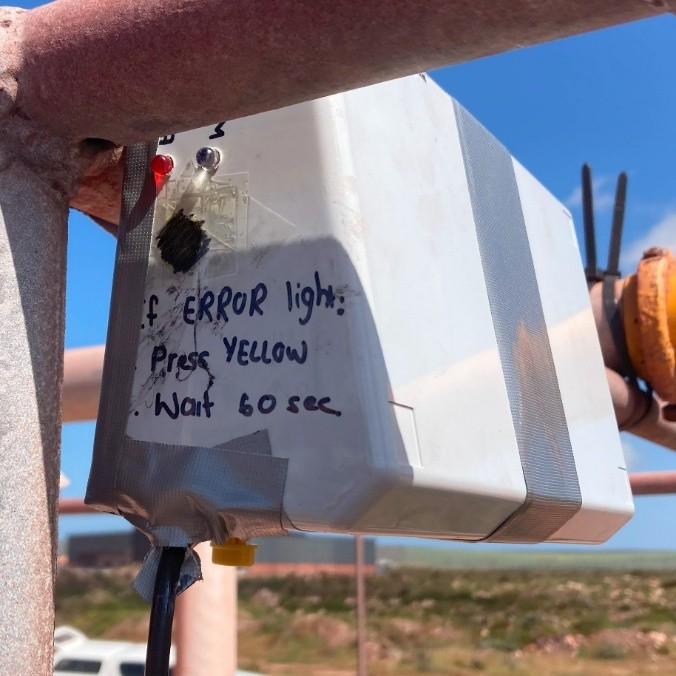
Deploying hardware in Saldanha Bay means exposing it to aggressive salt spray, high winds, and highly abrasive iron ore dust. The mechanical and electronic design had to account for these extreme environmental stressors to prevent premature failure.
The ultimate success of a hardware device is measured by the data it produces. The time-series data generated by this device directly informed the findings of the BIOGRIP research group. By bridging the gap between electronic engineering and earth sciences, the device provided tangible insights into industrial dust loads and metal content exposure, actively contributing to public health and environmental monitoring strategies in the Western Cape.

Project assets & Publications
The data retrieved from this custom hardware resulted in a comprehensive co-authored report detailing the dust load, metal content, and potential health impacts in the Saldanha Bay Municipality.
Published research: